![[tel]020 7433 1863[tel]](http://www.lilyskitchen.co.uk/cdn/shop/files/contact.svg?v=1747219162&width=32)

Every dog needs a complete and balanced diet made with wholesome ingredients to help keep them healthy and happy, which is all the more important for dogs of more advanced years. We’ve put together a senior dog feeding guide full of top tips, including advice on evolving needs, choosing the right food and feeding habits you can action to support our aging companions.
YOUR SENIOR DOG'S NEEDS
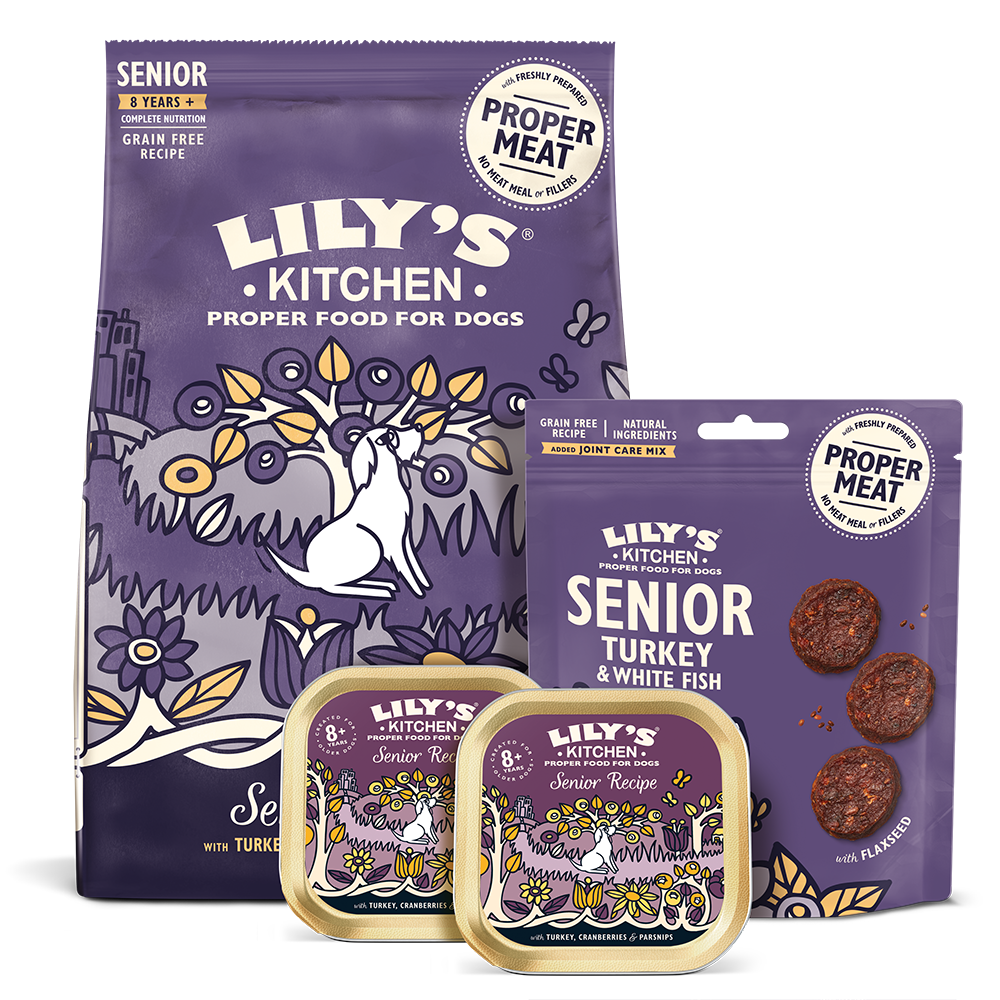
It’s important to feed your senior dog recipes that are made for senior dogs, as these are specifically tailored to meet their nutritional requirement needs.
These recipes typically contain a higher protein content to support muscle mass as well as vitamins and minerals to boost their immune system.
Dogs who are slowing down, facing mobility challenges or experiencing joint stiffness may benefit from senior foods with added ingredients that are known to benefit the joints, while others may need the help of prebiotics to help with digestion.
Some older dogs struggle with their dental health which can make dry food uncomfortable to eat. Others may not be drinking as much as they used to. In these cases, feeding your senior dog wet food is a better option, thanks to its soft texture and higher water content.
Obesity is one of the biggest problems in senior dogs. Carrying extra weight doesn’t just make it harder for your old friend to get around, it also affects their joints and general health. Which is why it’s important to monitor what your dog eats as their activity level decreases.
If your dog has a food allergy, a sensitivity or a dietary restriction, there are speciality dog food options. Speak to your vet about the food that is best for your specific dog.

MAKING CHANGES TO THEIR DIET
As your older dog slows down and becomes less active, they’ll usually need fewer calories in their daily diet. However, it’s not as simple as just feeding your dog less - your trusted companion actually needs a different, more nutrient dense food.
Your dog’s digestive system will also be more sensitive as they get older; making it particularly important not to make any abrupt changes, to avoid the risk of tummy upsets. This more delicate digestive tract is also the reason that senior dogs are fed a more easily digestible diet.
If you are either changing to a different recipe or to a new food, it’s best to introduce it into your dog’s diet bit by bit over about a week. Start with a mix of 4/5 of your current food to 1/5 of the intended recipe.

Tips on feeding your senior dog
We want our wise woofers to get the most out of their food. Here are a few handy tips to help you serve up their dinner properly.
Feed senior dogs little and often
Rather than feeding them 2 times a day, it may be more manageable for your dog to eat smaller portions frequently instead.
Store senior dry food properly
Keep your furry companion’s dry food stored in a dry, clean environment in a re-sealable or airtight package to keep it fresh.
Serve senior wet food at room temperature
If you keep your dog’s food refrigerated, remember to let it sit out for two hours before offering it to your dog so it can come to room temperature. This helps bring out its tasty smells and taste.
TIP: If you forget and it’s your pooch’s dinnertime, it’s fine to warm wet food in the microwave. Just make sure it’s not too hot – we don’t want to burn their mouth!

Feed your senior dog in a quiet environment
It’s important that your dog has a quiet, designated spot to eat that is away from distractions, including other pets. Another dog may cause stress or try to steal their food, so it’s a good idea to feed them separately.
Consider a raised bowl for your senior dog
Some older dogs can struggle with health issues such as arthritis, which can make it harder for them to bend down to eat their food. Serving their dinner in a raised feeding bowl will help them access their food more easily.
How much should I feed my senior dog?
To keep your senior dog in optimal health, it’s essential to feed them the right amount of tailored food. Overfeeding could lead to obesity, while underfeeding could put them at risk of nutritional deficiencies. Our handy feeding guide can help you find the right amount for your pooch.
The information in this article is intended as a guide to help pets and pet parents on their journey together. It is provided for educational and informational purposes only and is not meant as a substitute for professional advice from a vet, behaviourist, trainer or other professional. We encourage all pet parents to consult with their vet and/or behaviourist to ensure their pet’s specific needs are met.
Updated on 17/02/2026